
Digital Transformation
: the disruption new inexperienced, unstructured and aggressive business is applying to the norm.
This impacts how existing business responds and changes how information is handled. It’s about innovation, shortcuts, and streamlining. What is the minimum and what is needed to deliver something fast?
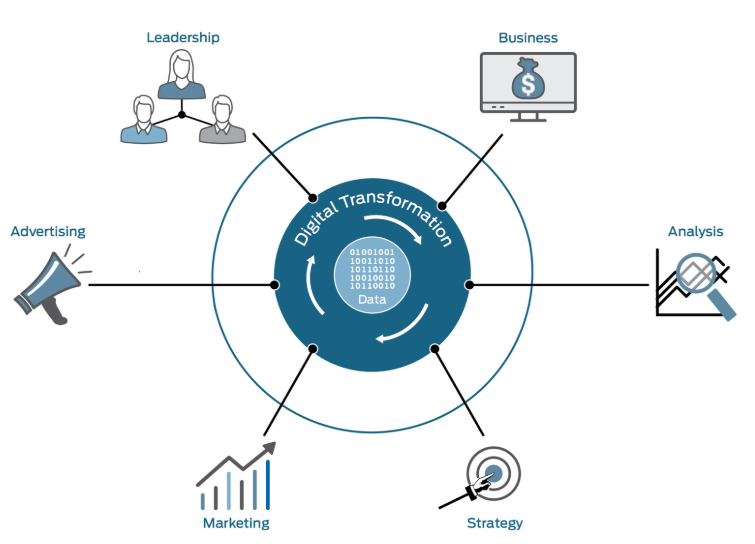
Agile is the methodology of lean thinking which lends to Digital Transformation. DT is about changing how things are done.
Digital Transformation involves the activities, and processes, that can fully charge and empower a company’s effort to change. Due to the accelerating adoption and innovation taking place it changes how we see and use technologies when altering course.
Transformation is about creating new opportunities and possibilities. Yes technology is a big part of it, though it’s more about shedding outdated or inherited ways of doing things, replacing them with new innovative ways, in a nut shell it’s becoming fluid in a time of near chaos.
DT is not about how a single department operates or becomes more efficient, or offering a new product or service, or moving data and information to the cloud. An alteration to the company web site does not represent DT.

DT is about the organization as a whole creating change and doing things differently in the pursuit of effective productivity and evolution. It’s often little changes internally such as: “Hey we’re working with your team and it feels different” or “I can’t believe that IT delivered this project early and it left me willing to repeat the experience”.
Digital Transformation depends on the innovation, and thinking of people, just because something is new to your organization doesn’t mean it’s innovative. Large companies are trying to implement new technologies like Artificial Intelligence, Blockchain, and cloud computing, even data analytics. Companies will try to stylize themselves as innovative, without understanding how new technology can change the way they do business in the future.
Watching the competition someone says, ”XYZ company just implemented a chatbot!! we have to do the same, and quick!” All is calm, sit down, relax. Digital Transformation is not about analytics and AI, it’s not about cool and fancy technology, it’s not about doing more with less by using technology to replace a person. DT is about using information and knowledge to question assumptions and challenge the status-quo. DT is more about the courage to do things differently and consider the thinking; “what if?”.
Business has been transforming since the Keiunkan Inn in Japan, which was founded in A.D. 705. The only difference is today we’re dealing with digital information.
DT is about the goals of the company, not about the technology. Success in DT is realizing any change the company wants to take needs leadership, and culture, as it involves the whole ship so to speak. The change will be painful and likely inevitable, if the company is to survive.
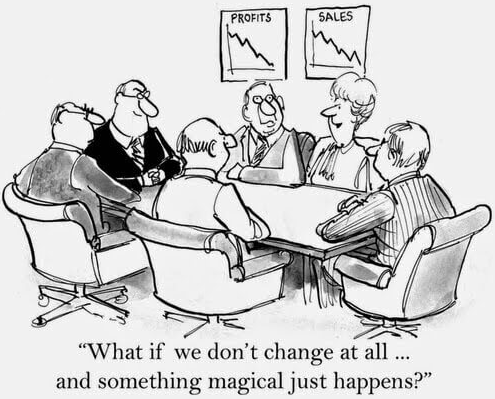
I turned to Google and searched “examples of company culture change”, this is what I came across: General Electric, giving your employees immediate performance feedback is a growing necessity in today’s connected world. To stay agile and attractive to employees, the 125-year-old General Electric needed to make this change too. GE is abandoning its formal annual reviews and its legacy performance management system, relics from the Jack Welch “rank-and-yank” days, in favor of a less regimented system of more frequent feedback. “The world isn’t really on an annual cycle anymore for anything,” says Susan Peters, GE’s head of human resources. “I think some of it, to be really honest, is millennial-based…what we’re trying to do is to make a major shift in the company’s culture towards simplification, towards better, faster outcomes for customers.”
Integrating and incorporating digital technology into all areas of the business to make a fundamental change on how the business operates and delivers to customers, requires a cultural change. The company needs to become comfortable with failure, and show they are willing to think differently and has the strength of all the employees to accomplish innovation. This describes Digital Transformation better than saying we’re moving data or have implemented AI.
Howard King, in a contributed article for The Guardian, puts it this way: “Businesses don’t transform by choice because it is expensive and risky. Businesses go through transformation when they have failed to evolve.”
So it seems transformation is about the acceptance of business evolution, and the way the business chooses to take part in the reality of that. Using technology to assist in corporate evolution is just a part of it.